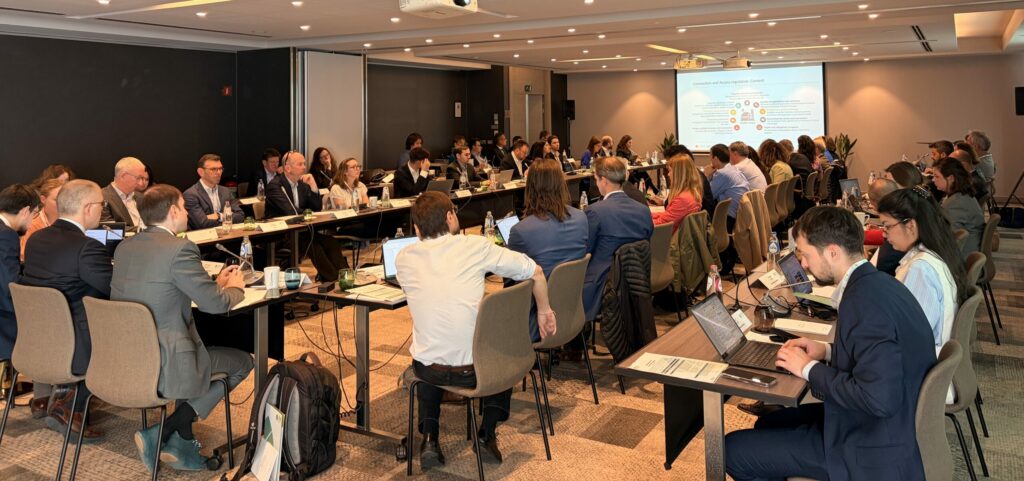
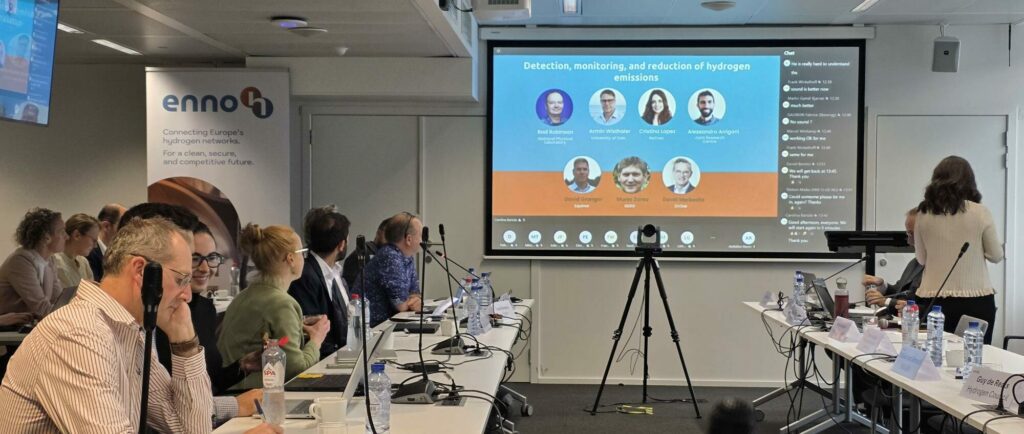
GERG participated in ENNOH’s workshop on Hydrogen emissions: impact assessment and leak monitoring, detection and reduction, held on Tuesday, 13 October, in Brussels, Belgium, bringing together experts to discuss best practices for detecting, monitoring, and reducing hydrogen leaks. The European Network of Network Operators for Hydrogen (ENNOH) organised the workshop.
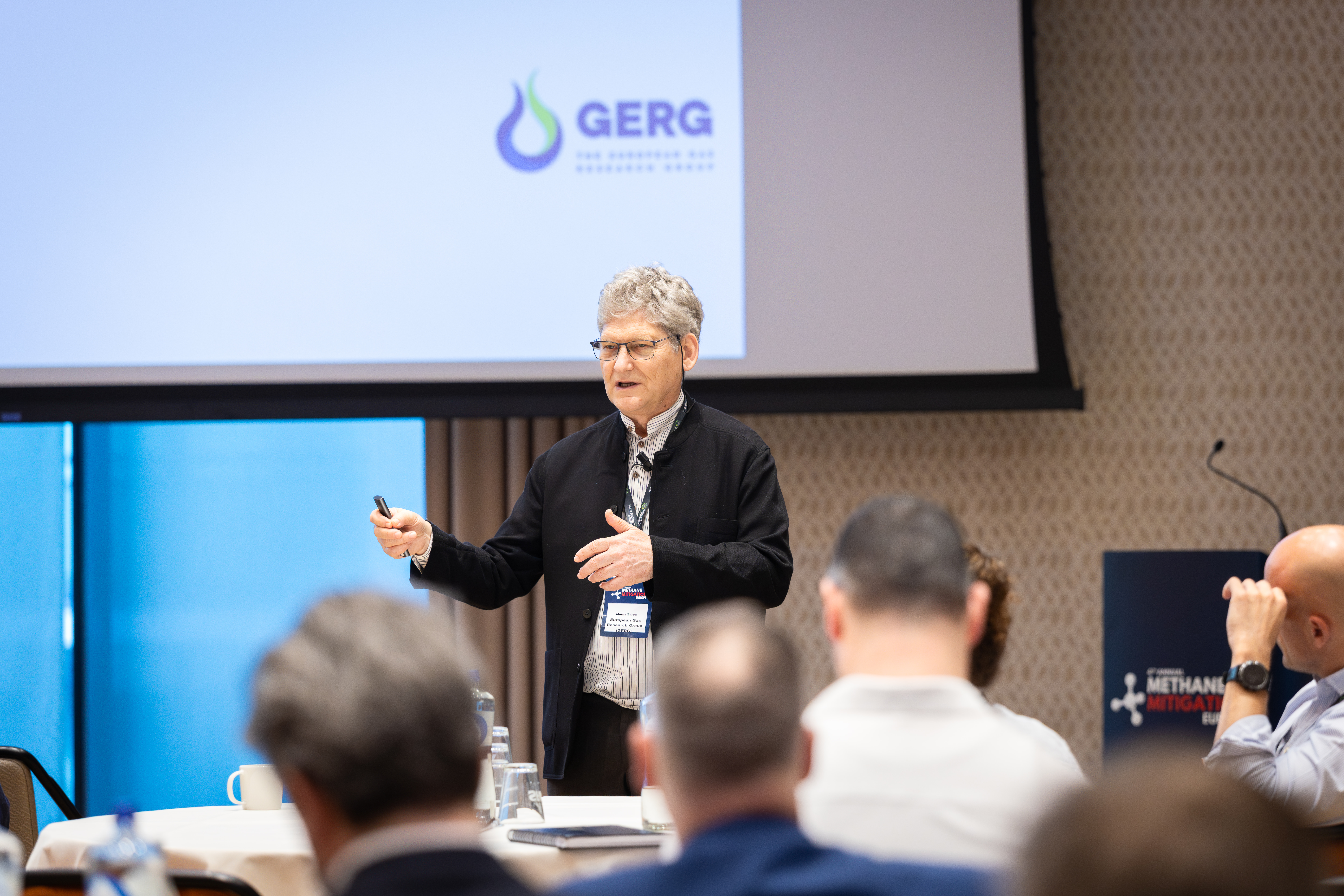
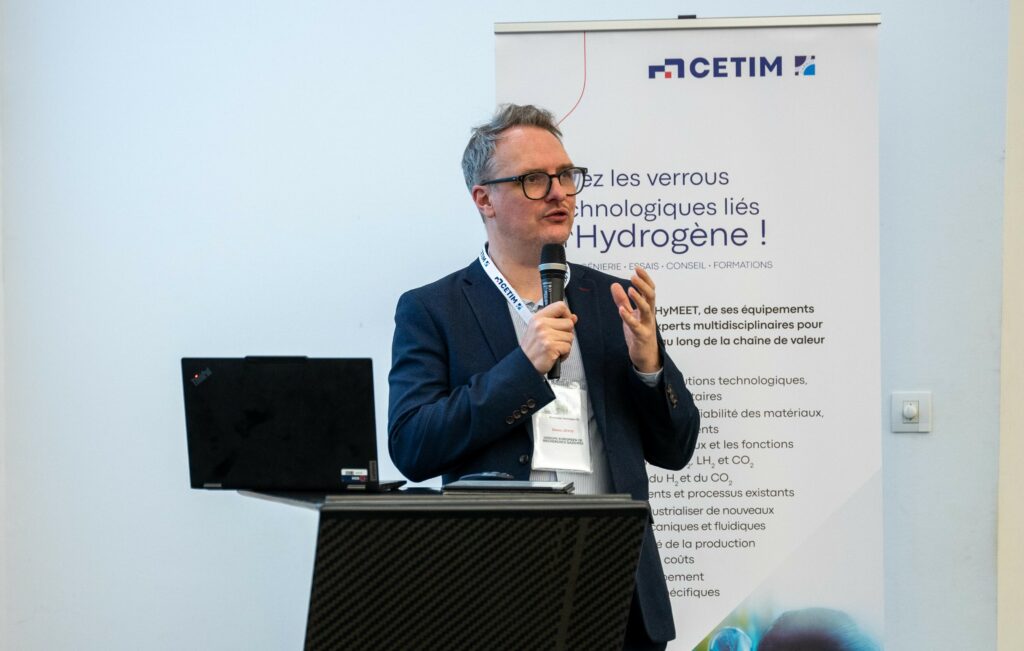
Murès Zarea, Co-Chair of the GERG Emissions Working Group, represented GERG in a roundtable discussion focused on the latest developments in hydrogen emissions detection, quantification and monitoring.
He highlighted GERG’s involvement in prenormative metrology research on the hydrogen value chain by listing the 18 projects in which GERG and its members collaborate, particularly with EURAMET, the EU Association of National Metrology Institutes, and co-funded by the Clean Hydrogen Partnership or Horizon Europe. Other R&D gaps are also covered, such as material compatibility, leak tightness, integrity, and pipeline energy capacity. Click here to discover the content presented at the ENNOH Workshop.
NHYRA has a systemic approach to estimate hydrogen emissions along full value chains based on published prospective scenarios. These results contribute to better inform the work of other projects, like HYway, to estimate climate impacts of anthropogenic hydrogen emissions.
Concerning climate impact, he stressed the need to also measure more comprehensively the source term of natural hydrogen emissions, as this could represent a significant term in the overall balance, and therefore influence the effect of anthropogenic emissions.
Murès Zarea: "We can save significant time and resources when quantification or other approaches, like mitigation, apply similarly to both hydrogen and methane. An example is GERG’s current “High Flow Sampling performance evaluation” pre-normative collaborative R&D project: it evaluates performance of available & innovative HFS devices in lab tests, in controlled release tests, and in field tests. The results will feed standardisation work in CEN TC 264, (supporting the EU Methane Regulation), as the project will develop a performance evaluation procedure and a general procedure for standardised use of these devices. In parallel, NHyRA tests HFS devices for H2 with 100% H2. The learnings from the first project will save time and resources when it comes to adapting the HFS standards for methane use to hydrogen use.”
The panel also featured contributions from other key stakeholders, including Alessandro Arrigoni, Scientific Officer at the Joint Research Centre; Cristina López, Gas Detection & Methane Emissions R&D Project Manager at NaTran; Armin Wisthaler, Expert in Gas Analysis at the University of Oslo and Founder of adMS; and David Grainger, Senior Manager of Low Carbon Solutions at Equinor. Rod Robinson, Principal Research Scientist at the United Kingdom’s National Physical Laboratory, moderated the session.
The workshop provided an overview of the state of the art in hydrogen leak detection and monitoring technologies, highlighting ongoing research, development, and innovation initiatives. It also offered a valuable platform for an informed, evidence-based discussion on the climate impacts of hydrogen emissions and the approaches being developed to address them.
GERG’s participation in this high-level roundtable underscores the relevance of its work on hydrogen emissions detection, monitoring, quantification and reduction, as well as on a more systematic view of hydrogen emissions in different scenarios of hydrogen economy development (NHYRA project: Publications Archives - NHyRA).
GERG thanks ENNOH for the invitation and welcomes opportunities to contribute its technical expertise to the safe and reliable development of Europe’s hydrogen transmission system.